
The Peoples Democratic Party (PDP), once the self-proclaimed largest political party on the African continent, currently finds itself navigating one of the most treacherous periods in its twenty-seven-year history. The party, which held sway over Nigeria’s federal government for sixteen uninterrupted years, is now grappling with an identity crisis that threatens not just its electoral viability but its very survival as a corporate entity. The current state of affairs is not merely a result of losing two consecutive presidential elections; rather, it is the consequence of a systematic internal erosion orchestrated by elements who seem determined to trade the party's independence for immediate political survival. The question of "where the party goes from here" is no longer a rhetorical exercise in political strategy but a fundamental inquiry into the future of multiparty democracy in Nigeria. If the party fails to answer this question correctly in the coming months, it risks becoming a mere footnote in the nation’s political history, reduced to a regional pressure group rather than a national government-in-waiting.
At the heart of the PDP's current malaise is the phenomenon of the "fifth columnist"—high-ranking party officials who openly align with the ruling All Progressives Congress (APC) while retaining their seats in the PDP’s highest organs. This brazen anti-party activity, which would have attracted immediate expulsion in a more disciplined era, has been allowed to fester, creating a culture of impunity that has demoralized the rank and file. The spectacle of party leaders, including serving ministers in the APC government, publicly declaring their intention to "hold the party" for the incumbent President ahead of 2027 is an anomaly that defies political logic. It suggests that the opposition is being hollowed out from within, transformed into a controlled entity designed to provide the illusion of competition while guaranteeing the continued dominance of the ruling establishment. This strategy of "state capture" of the opposition is the most potent threat to Nigeria's democratic evolution since the return to civil rule in 1999.
The dangers of this trajectory extend far beyond the fortunes of the PDP; they strike at the core of the nation's democratic health. A vibrant democracy requires a robust opposition capable of offering alternative policy prescriptions and holding the government accountable. When the main opposition party becomes a satellite of the ruling party, the checks and balances essential for good governance disappear. The current paralysis within the PDP's National Working Committee (NWC), where factions battle for control not to advance the party's interests but to determine who holds the key to the party's surrender, is a disservice to the Nigerian electorate. The citizens, currently groaning under the weight of economic hardship, are looking for a political vehicle that can articulate their frustrations and offer a path to recovery. Instead, they are presented with a theatre of the absurd, where opposition leaders are more interested in pleasing the Presidency than in mobilizing the masses for change.
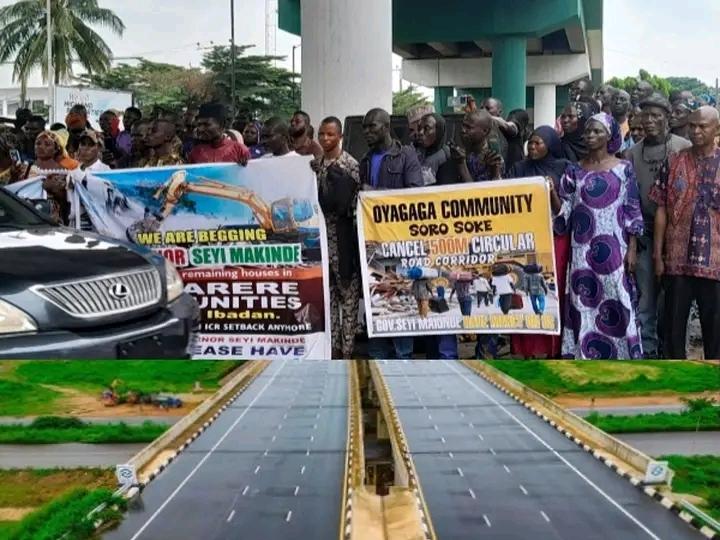
The recent revelations by Oyo State Governor, Engr. Seyi Makinde, regarding the plot to "hand over" the PDP structure to President Bola Tinubu for the 2027 election have brought these subterranean machinations into the daylight. By refusing to be part of this arrangement, the "integrity group" within the party has drawn a line in the sand, forcing a confrontation between the forces of autonomy and the agents of capitulation. This clash is not merely a personality contest between governors and ministers; it is an ideological battle for the soul of the party. On one side are those who believe the PDP must remain a distinct, independent political force; on the other are those who view the party as a bargaining chip to be traded for federal patronage and protection from prosecution. The outcome of this struggle will determine whether the PDP emerges as a phoenix from the ashes of 2023 or disintegrates into irrelevant factions.
Furthermore, the leadership vacuum at the national level has exacerbated the crisis. The inability of the party's organs—the National Executive Committee (NEC) and the Board of Trustees (BoT)—to enforce discipline and assert the supremacy of the constitution has created a "free-for-all" environment. The protracted tenure of acting officials and the continuous postponement of decisive meetings have fueled suspicions that the party's administrative machinery has been compromised. A party that cannot govern itself cannot hope to govern the nation. The urgent task before the genuine stakeholders of the PDP is to restore constitutional order, ending the era of "acting" leaderships and ensuring that the party's officers are chosen through a transparent, democratic process that reflects the will of the members, not the dictates of external puppeteers.
The path forward requires a brutal honesty that has been lacking in recent years. The PDP must acknowledge that it cannot out-spend or out-rig the ruling party; its only path to victory lies in regaining the trust of the Nigerian people. This trust was eroded not just by the loss of power, but by the perception that the party stands for nothing. To rebuild, the PDP must articulate a clear, alternative vision for Nigeria’s development—one that contrasts sharply with the current administration's policies. It must reconnect with its grassroots base, the farmers, the students, the market women, and the professionals who feel abandoned by the political elite. This requires a new breed of leadership that is not encumbered by the baggage of the past or compromised by the allure of the present government's "unity" carrot, which is nothing more than a trap to silence dissent.
If the PDP chooses the path of accommodation with the APC, it will cease to exist in any meaningful form. It will become a "zombie party," wandering the political landscape without a soul or a purpose. However, if it chooses the path of resistance and rebirth, the road will be difficult but ultimately rewarding. It will require the courage to expel those who have already mentally defected, regardless of their financial war chests or political titles. It will require the discipline to rebuild state chapters that have been fractured by imposition and neglect. And above all, it will require the selflessness to place the national interest above personal ambition. The 2027 election is not just another cycle; it is the deadline for the PDP’s relevance.
Ultimately, the answer to "Where does the PDP go from here?" lies in the hands of its true owners—the members who have remained loyal despite the inducements to leave. They must rise up and reclaim their party from the merchants of fortune who are currently auctioning its legacy. The time for sitting on the fence is over. The PDP must either stand up as the bastion of Nigerian democracy or lie down as the doormat of a one-party state. The choice is stark, the time is short, and history will be unforgiving to those who facilitate the death of the opposition in Africa’s most populous nation. The world is watching to see if the umbrella can still provide shelter or if it has been permanently torn by the winds of selfishness and betrayal.

Leave a comment
Your email address will not be published. Required fields are marked *