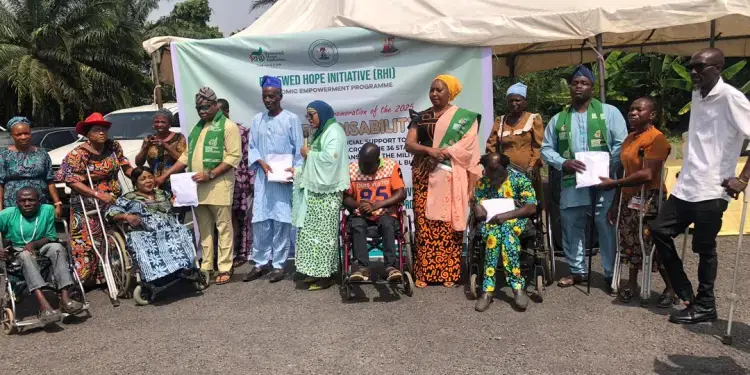
In a significant move to bolster the economic resilience of vulnerable demographics across the federation, the First Lady of the Federal Republic of Nigeria, Senator Oluremi Tinubu, has officially rolled out a comprehensive financial empowerment package for persons with disabilities (PWDs) in Oyo State. The intervention, orchestrated under the banner of the Renewed Hope Initiative (RHI) Economic Empowerment Programme, was launched in Ibadan to commemorate the 2025 International Day of Persons with Disabilities. This strategic disbursement targets the grassroots economy, providing direct capital injection to 250 pre-selected beneficiaries, each receiving a business recapitalization grant of ₦200,000. The total financial commitment for the state stands at ₦50 million, a figure that underscores the scale of the federal administration's social welfare agenda.
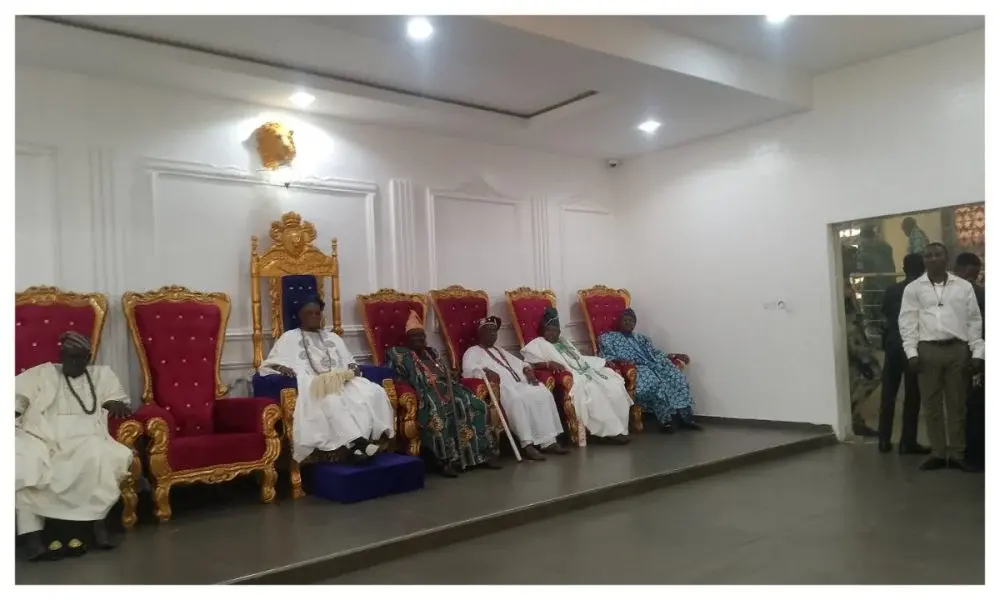
The event, convened at the Local Government Training School within the State Secretariat, served as the focal point for the South West region's implementation of this nationwide directive. Senator Tinubu, represented by the Oyo State Commissioner for Special Duties, Hon. Faosat Joke Sanni, articulated the administration’s philosophy that national economic growth is inextricably linked to inclusive empowerment. She posited that the marginalization of any segment of the population, particularly those with physical or cognitive challenges, represents a critical loss of human capital. Consequently, this grant is not designed as a charitable handout but as a fiscal stimulus to reinvigorate small-scale enterprises owned by PWDs, enabling them to transition from dependency to self-reliance.
The scope of the Renewed Hope Initiative’s intervention is expansive, operating simultaneously across all 36 states, the Federal Capital Territory, and the Defence and Police Officers' Wives Association (DEPOWA). The First Lady revealed that the aggregate national disbursement amounts to ₦1.9 billion, targeting 9,500 beneficiaries globally. This synchronization suggests a high level of logistical coordination within the presidency's social investment arm, aiming to deliver a uniform standard of support regardless of geographic location. By standardizing the grant at ₦200,000 per individual, the initiative attempts to provide a substantial enough "seed fund" to make a tangible difference in the current inflationary economic climate.
During her address, Senator Tinubu referenced the ethos of Helen Keller, emphasizing that collective action is the bedrock of an inclusive society. She aligned the programme with President Bola Ahmed Tinubu's broader economic blueprint, which prioritizes social protection as a core pillar of governance. The narrative pushed by the First Lady is one of "sustainable livelihoods" rather than sporadic aid. She highlighted that over the past two years, the RHI has facilitated cash grants for over 100,000 petty traders, suggesting a consistent policy trajectory aimed at the bottom of the economic pyramid. Furthermore, she announced a policy shift: the RHI Governing Board has institutionalized this specific empowerment programme, scheduling it as an annual event to coincide with December 3rd, thereby integrating it into the national fiscal calendar.
The role of the Oyo State Government in facilitating this federal program was also acknowledged, with special commendation given to Governor Seyi Makinde and his wife, Engr. Tamunominini Makinde. This collaboration across party lines highlights a convergence of interest in social welfare. Barrister Ayodele Adekanmbi, the Director-General of the Oyo State Agency for Persons with Disabilities, utilized the platform to reiterate the state’s domestic policy on inclusion. He noted that Oyo State enforces a deliberate quota system across education, employment, and infrastructure to prevent the systemic exclusion of PWDs. This synergy between federal funding and state-level policy framework is essential for the long-term success of such interventions.
Economically, the injection of ₦50 million into the micro-economy of the disability community is expected to have a multiplier effect. Beneficiaries, many of whom operate within the informal sector as artisans and traders, are likely to utilize these funds to restock inventory, repair equipment, or settle operational debts. In an era of high operating costs, such non-debt financing provides a critical buffer that allows these micro-enterprises to survive market volatility. Lawal Lateef Kayode, speaking on behalf of the recipients, pledged that the funds would be utilized strictly for business expansion, acknowledging the responsibility that comes with such public trust.
The transparency of the selection process remains a pivotal aspect of the programme's credibility. While the event showcased the handover of grants, the long-term impact will depend on the monitoring and evaluation mechanisms put in place to ensure the money reaches the intended targets without bureaucratic attrition. The First Lady’s team has indicated that this is part of a broader "Social Investment Programme" that also covers widows, orphans, and flood victims, aiming to weave a tighter social safety net.
Ultimately, this intervention by the First Lady represents a shift from rhetoric to tangible financial action in the realm of disability rights. By placing capital directly in the hands of PWDs, the Renewed Hope Initiative is testing the thesis that economic empowerment is the most effective form of social integration. As these 250 beneficiaries in Oyo State deploy their grants, they become test cases for the efficacy of direct cash transfers in alleviating poverty among Nigeria's most vulnerable citizens.

Leave a comment
Your email address will not be published. Required fields are marked *